Sunday, September 17, 2017

The Twenty-fourth Sunday in Ordinary Time (Year A)

TO FORGIVE IS DIVINE
Sirach 27: 30 – 28: 7; Romans 14: 7-9; Matthew 18: 21-35
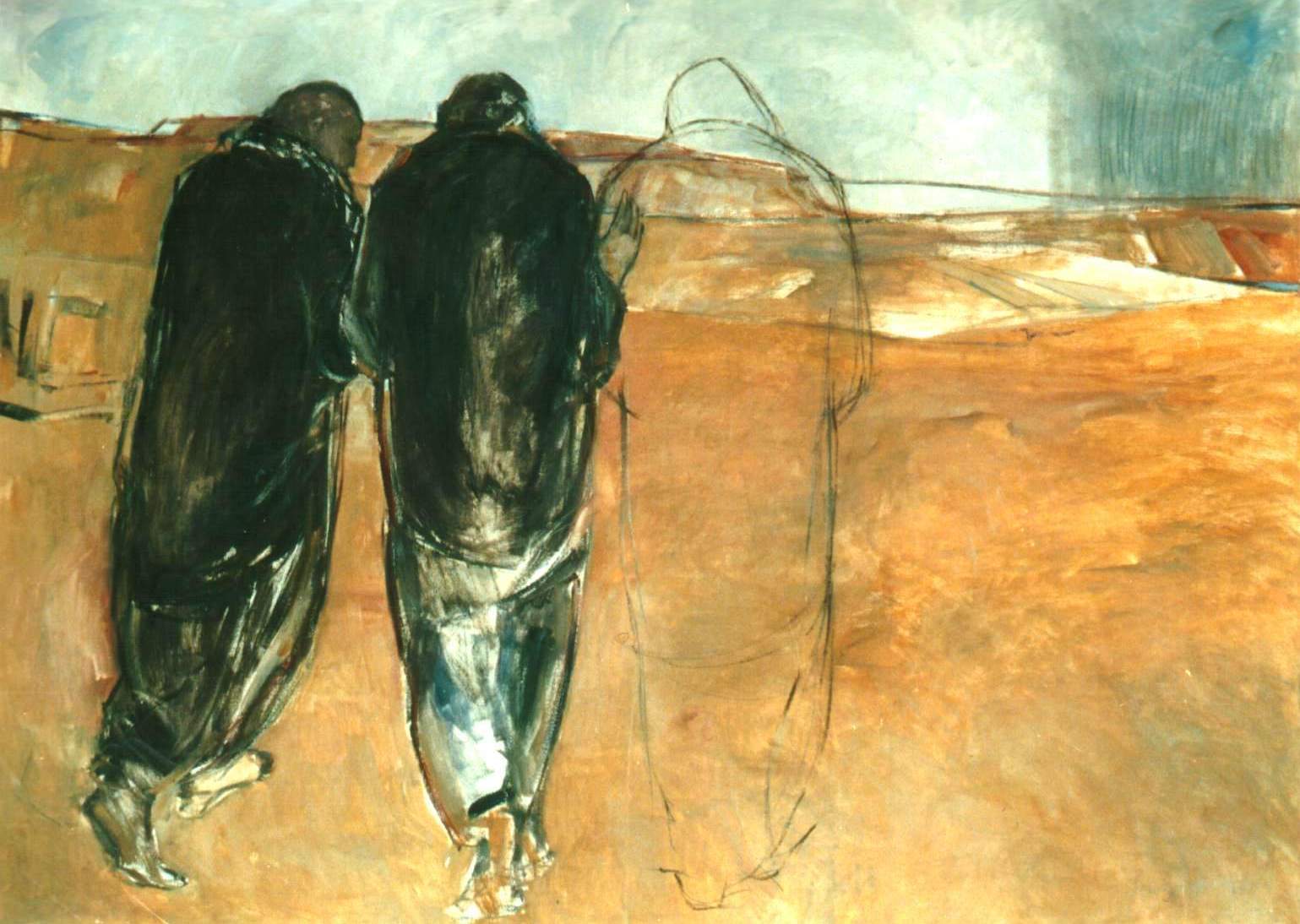
A condemned man hangs on a cross just outside of Jerusalem on a hill called Golgotha. Although for three years he has proclaimed Godly love, here he is now met with demonic hatred. Soon this preacher from Nazareth will lift his eyes to heaven and commend his spirit to his Father. But before he does, he looks down. He looks down directly into the eyes of those who five days earlier waved palm branches and shouted out to him, “Hosanna to the Son of David!” but who this day wave their clenched fists at him, curse him, and shout, “Crucify him! Crucify him!” He looks down into the eyes of those who just moments before stripped him and used the very instruments that he had used as a carpenter, hammer and nails, and pounded those nails into his hands and his feet. Into their eyes he looks. And as he does, he says, “Father, forgive them, for they know not what they do.” 

To err is human. To forgive is divine.

Maria was close to her 12th birthday when she was stabbed to death by 19 year old Alessandro Serenelli, a farmworker who shared a dwelling with her family. Alessandro had attacked the young girl when she resisted his efforts to sexually assault her. Alessandro was sentenced to 30 years in prison. Although he was aware that Maria had forgiven him on her deathbed (even saying she wanted to be in heaven with him) he didn’t feel remorse. One night during the third year of his confinement, Maria appeared to Alessandro in his cell. She was smiling and holding 14 lilies to symbolize the 14 wounds she suffered—which she lovingly offered to the man who had taken her life. From that moment on, he lived a life of goodness and grace. Four years after his release from prison, he went to visit Assunta, Maria’s mother. Begging Assunta's forgiveness, she placed her hands on his head, caressed his face and gently said, "Alessandro, Marietta forgave you, Christ has forgiven you, and why should I not also forgive. I forgive you, of course, my son! Why have I not seen you sooner?" The next morning Assunta took Alessandro by the hand and led him to Mass. From that day on he was welcomed into the family as "Uncle Alessandro." Assunta and Alessandro were also side by side when St. Maria Goretti was canonized. 

To err is human. To forgive is divine. 

This past April (2017), Robert Godwin Sr. was walking home from an Easter meal when a man walked up to him and shot him in the head. To add to the horror, the killer recorded the shooting and uploaded it to Facebook. Thousands of people saw the slaying before it was removed over an hour later. The family’s grief, particularly that of Godwin’s children, was painfully evident on the next day’s morning news. But so was their love. In a baffling demonstration of grace, three of his children publicly forgave their father’s killer. His daughter Tonya said, “Each one of us forgives the killer, the murderer. … We want to wrap our arms around him.” Godwin’s son said, “I forgive him because we are all sinners.”

To err is human. To forgive is divine.

I know what you’re thinking: “I could NEVER forgive like that! I just couldn’t. But in today’s Gospel, Jesus tells us that we CAN . . . and more than that . . . . we MUST. 

In our Gospel, Jesus offers a parable about a servant who is ultimately condemned by his master, not because of the servant’s debt to him, but because the servant refused to forgive the debt of his fellow servant. So do you think Jesus is serious about this forgiveness thing? I think so. It’s the only time in all four Gospels that he put a PS on one of his parables: “So will my heavenly Father do to you, unless each of you forgives your brother from your heart."

To understand what Jesus is talking about in today’s Gospel, maybe we need to understand what he isn’t saying: He’s not saying that forgiving is condoning. By trying to understand those who have wronged us, or even forgiving them, we aren’t saying that their actions are acceptable. He’s not saying that forgiving is pardoning. When we forgive, we aren’t exonerating anyone from responsibility. He’s not saying that forgiving is a form of martyrdom. When we forgive, we don’t suppress our emotions and we aren’t doing it for the person who wronged us . . . We’re forgiving for ourselves.

So what is he saying? He’s telling us that forgiveness means freedom. Forgiveness frees us. It opens us up. It allows us to stop playing games. We no longer have to pretend that it didn't hurt, because it did; we don't have to pretend that everything's fine, because it’s not. When we forgive, we say to the person who has hurt us, “I will not allow you to do that again!” But more importantly, when we forgive, we say to ourselves, “I’m moving on with my life; I refuse to be held back by her mistakes or his problems!” That's forgiving. It's not saying that everything’s alright (that would be a lie) it’s saying, “I’m moving on now... there’s no grudge, no revenge - it's over; I’m through; the past is past and I’m free!”

Guess who gets blessed when you forgive. YOU do. The importance of forgiveness is not so much that it absolves the person forgiven as that it cleanses the person who forgives. Forgiveness is the greatest gift you can give yourself. Forgiveness just might be the most gloriously selfish thing that we do. 

Maybe this story can better explain what I’m talking about: This is probably going to seem silly to you, but I did something on August 15th that I never thought I'd do because I thought it would be too painful. But I decided I needed to do it. I drove to Bergen Catholic where I used to teach. I only work ten minutes from the school but have avoided it like the plague. You see, my exit from there six years ago wasn’t pleasant and has left its scars. And even though I’ve prayed to be able to forgive those that I felt wronged me, the hurt was still there, as were my fantasies of revenge. I always felt that if I even saw the building again, all the hurt would come flooding back. But on that day last month, I decided I needed to do this. So I drove to the school and into the semicircle in the front of the building. And you know what? I felt nothing! No hurt. No nostalgia. No bad memories. No happy memories. No anger. No regrets. NOTHING! I even said a prayer as I did it. The demons that held me in their grasp for six years were finally released. I felt lighter. Like a weight had been lifted from me. And I felt that I was finally able to move on. 

So maybe that’s what forgiveness really is. It’s letting go so we can move on. Too many of us are controlled by events that occurred yesterday. We drive through life looking in the rearview mirror rather than keeping our eyes on the road ahead. The decision to forgive is a decision to live in the present moment. 

So this week, let’s take our hurts and our grudges to a trash heap. The heap is just outside of town at a place called Golgotha. Here one sinless man hangs falsely accused between two criminals. He is abused but will not retaliate; condemned but will not judge. He is beaten, but will only show mercy. At the cross, his mercy becomes his justice, and that all becomes grace. Let’s take that grace home with us and lay in bed at night with it when we are tempted to tally up the score of hurts from the day. Because to err is human. And to forgive is . . . well, you fill in the blank.

Sunday, August 20, 2017

Twentieth Sunday in Ordinary Time (Year A)

THE SILENCE OF JESUS
Isaiah 56: 1, 6-7; Romans 11: 13-15, 29-32; Matthew 15: 21-28 
Do you have a favorite story from the Gospels? Maybe the story of Jesus’ birth, or an account of one of his miracles – healing someone, changing water into wine at the wedding feast at Cana, the multiplication of the loaves and fish, walking on water? Maybe a parable of Jesus – the Lost Sheep, the Prodigal Son, the Good Samaritan? 

What about lines of Scripture? Do you have any favorites? Most of us do. Maybe “Ask and you shall receive, seek and you will find, knock and the door will be opened to you.” Or “A new command I give you, love one another as I have loved you.” John 3:16 is a popular one (at least among football fans) – “For God so loved the world that he gave his only Son, that whoever believes in him should not perish but have eternal life. 

The reason why I ask is because what we just heard is probably not on anyone’s list. As a matter of fact, it’s my least favorite passage in all four Gospels. In it, we meet a Jesus that I’m not really sure I like. He seems arrogant, prejudice, rude, insulting, sarcastic and downright mean. Far different from the one we’re accustomed to. And for me, it contains the most devastating line in all of Scripture: “But he did not say a word in answer to her.” 

It’s this silence of Jesus that sends one's mind and heart spinning when we read today's Gospel. “But he did not say a word in answer to her.” He certainly heard the plea of the Canaanite woman, for the disciples begged him to get rid of her because she was being so loud. “But he did not say a word in answer to her.” Can this be the Jesus whom we call merciful? Can this be the one who was known for his wonderful deeds of compassion? Yes, it’s he. It’s none other than Jesus, "Lord, Son of David," who is silent.

The silence was unmercifully disconcerting, but the words that then came from his mouth sounded like the ultimate in thoughtless mercilessness. ‘I was sent only to the lost sheep of the house of Israel.'" To her it sounded like, "I want nothing to do with you, for I have not come for anyone such as you. I have a mission, but you’re not part of it."

But she just wouldn't give up! She then confronted him directly, "Lord, help me." It was the voice of the most helpless of all the helpless ones. "Help me." I have no other recourse. Only you can help me. Have mercy.

"It is not right to take the children's bread and throw it to the dogs." Oh, the heartlessness of that response! Perhaps better the silence than this, to be called a "dog." Yet, she had heard this "title" bestowed upon her before. It was typical of a Jew to speak thus of the Gentiles. To hear that in the face of this need, though, was truly a sign that all was now over. What more was there to be said?

She would gladly be a dog, she said to Jesus, if he would just do what dog owners do - let some crumbs fall from the table for the dog to lick up. It would be enough to have some crumbs! She asked for nothing more. And there was one thing she was determined she would not do, and that was to go away without at least some crumbs from the master's table. If this was, indeed, the Lord she had heard about in the many rumors flying about - and if, indeed, he was "Lord, Son of David," he could and, in fact, had to give her what she requested. Why? Because he was who he said he was! That was the beginning and the end of her plea. "Be who I know you to be and I will be satisfied!"

Then . . . at last! . . . the word she had been yearning for with all her heart! "Be it done for you as you desire." She had broken through all those "defenses," had endured all those "rejections," had insisted that Jesus be who he truly was - "Lord, Son of David"! "O woman, great is your faith!" 

What about you? Have you ever experienced this awful silence when you prayed . . . and prayed . . . and prayed . . . and nothing seemingly happened? Have you ever experienced what St. John of the Cross called “the dark night of the soul,” or the "hiddenness of God," as Martin Luther spoke of it? The God who asks us to pray is silent as we watch our resources dwindle to nothing while we ask him to help us find a job; as we watch a beloved father, mother child, friend continue to suffer from cancer; as we pray in desperation for safety from terrorism, and we hear the devastating news from Barcelona; as we beg God to turn the hard heart of a wayward child back toward the love and help of a parent who watches her waste her life away; as we hold up our hands in supplication for rain while our fields bake in the sun - or ask for relief from the rain as the floods pour over our land and our homes.

Having exhausted all your resources, having presented the total helplessness with which you approached the throne of God, have you felt rebuffed, as though your petitions fell on ears that wanted nothing to do with you? Have you ever felt as though out of the silence came an even more terrifying sense of sinking into the quicksand of the troubles that were so besetting you? The one who supposedly was hearing you spoke, instead, a word exactly opposite that which you wanted to hear. If you’re like Job, or the Canaanite Woman, or Mother Teresa, or me, probably you have. 

And so what do we do? It seems to me there are two options: We can retreat in anger, feeling abandoned and let down by God. Or we can pester God to be who he claims to be, “a God merciful and gracious, longsuffering, and abounding in goodness and truth” (Exodus 34:5-7). That’s exactly what the Canaanite woman did, so maybe we need to take our cue from her. Although we feel so guilty doing this, when we dare quarrel with God, he is delighted that we enter into dispute with him. For that is the mark of faith. We will not stop speaking with him, no matter what the circumstance, for that is the precise sign that we do, indeed, believe that he can be trusted to listen and respond. Faith is not mere submissive receptivity to someone beyond our understanding. Faith is a relationship that God initiated through our baptism. He draws us up into that relationship in such a way that he actually invites us to enter into it as a willing disputant by making it plain that we not only can, but that we should, expect him to be what he has said he is and that he will do what he promises to do. Faith is to take God so seriously that, when he hears us, he knows that we trust him so implicitly that we can say whatever is on our mind with the confidence that he will take it seriously, believing that even "in the silence" and "behind the hiddenness" he is still present, still promising, still acting in our behalf, still working out circumstances in our lives in a way ever so obscure to us, but ever so plain to him. 

And yes, God will make up his own mind about what to do concerning the contention we have with him when all is said and done. The woman's daughter was healed. But it doesn't always work out that way. Jesus' urgent request to let the cup pass from him wasn’t granted. His cross is the mark that the Father's will shall, in the end, be done. But that’s not as though he hasn’t heard and listened and taken seriously what the woman, what Jesus, or what we have to say. He made great good come out of Jesus' denied request! He relishes the times when we pour out our every wish before him, for it is the sign that we take God as seriously as he takes our situation seriously.

Matthew tell us about the woman in today’s Gospel because she is a model of faith for all who stand alongside her with that stirring cry, "O Lord, Son of David, we are severely oppressed by demonic powers. Lord, help us." There may be a terrifying silence for a while. It was so with her - and with Jesus. But when faith persists speaking into the face of that silence, the Word will eventually break the silence and demons will be sent away and the dead will be raised. For even in the silence we are in the hands of a gracious Lord who never fails to hear the cry "Lord, help us."

Sunday, July 23, 2017

Sixteenth Sunday in Ordinary Time (Cycle A)


SELECTIVE HEARING
Wisdom 12: 12, 16-19; Romans 8: 26-27; Matthew 13: 24-43 

Our gospel this morning is the second in a series of three where the Church focuses on Jesus as the master storyteller. Taken from the thirteenth chapter of Matthew’s Gospel, what we’re hearing is what is called the Parabolic Discourse – a collection of parables that Jesus uses to teach us about the Kingdom of God. So last week we heard the Parable of the Sower and the Seed, this week the Parable of the Weeds among the Wheat and the parables of the Mustard Seed and the Yeast. And next week we will hear an anthology of very short parables likening the Kingdom of God to a buried treasure, to a pearl of great of great price, and a net thrown into the sea. Although gathered by Matthew into one setting, these parables were probably told by Jesus at different times and in different places. Matthew collects them into a single chapter for convenience sake, to better organize his Gospel, and that none should be lost. 

So you would think that in a passage so beautiful and so rich as our gospel reading is this morning that it would be a piece of cake for me to write today’s homily. But it wasn’t. Part of the problem is that Jesus himself explains the parable, one of only two times that he ever did. And so I think it would be pretty presumptuous of me on my part to think that I could offer a better commentary on it than Jesus himself. So rather than me attempting to do something that would be complete folly, the Holy Spirit took me in a whole different direction. And so as I prepared my homily this week and meditated on the gospel, my attention became fixed on only one line. It’s the common line to both today’s gospel and the one we heard last week: “Those who have ears ought to hear.”

We all suffer from “selective hearing” at times, don’t we? Selective hearing is that chronic disease where we hear only WHAT we want to hear or hear only those WHOM we want to hear. We learn how to do this very early on in life. As little children, when faced with something we don’t want to hear, we cover our ears with our hands and then loudly start singing “La La La La La” to drown out the words of a parent, sibling or friend. It becomes a little more sophisticated when we reach our teenage years and we slam the door to our bedroom, put on the earphones and pump up the volume. And by the time we reach adulthood, we use the remote control to switch off what we don’t want to hear and tune in to that which is more to our liking. Or we do a mental cut and paste – we delete the things that we don’t want to hear and only remember the things we do. 

We can do the same thing with regard to our faith. I’ve mentioned this before – that the purpose of the gospel is to comfort the afflicted and to afflict the comfortable. And those parts of the gospel that are meant to afflict our comfort zones disturb us, challenge us, and hardly seem to be in any way, shape or form what is supposed to be GOOD News. 

It’s easy to hear, “Come to me all you who are weary and heavy burdened, and I will give you rest," as we did a few weeks ago. But not so easy to hear today that we’ll have to wait till final judgement at the end of the world for evil to be eradicated, and that until then, good and evil will coexist side by side. “Anyone who has ears ought to hear.” 

It’s easy to hear about a Good Shepherd who searches for the lost sheep and lovingly places it on his shoulders and carries it back to green pastures. It’s hard to hear about a king who separates the good sheep from the bad; and the good sheep are rewarded, while the evil who did not recognize him in the poor, the needy, the alienated, the socially unpopular, are sent off to Gehenna. “Anyone who has ears ought to hear.”

We’re consoled when we hear of a love so great as to lay down its life for those he loves. It’s hard to accept the words that came from the same mouth to “love your enemies, to pray for those who persecute you. “Anyone who has ears ought to hear.”

It’s nice to hear that “in my Father’s house there are many rooms.” But it’s hard to take when we’re told that the first shall be last and the last shall be first, and that the simple, the childlike, and the ones who serve rather than being served are greatest in God’s Kingdom. “Anyone who has ears ought to hear.”

It's hard to hear that we must take up our cross daily and follow in the footsteps of Jesus. We don’t want to hear that in order to be forgiven we must forgive seventy times seven times. We just don’t want to accept that we must love our neighbor as we love ourselves, and that our neighbor is the modern day Samaritan – the Moslem, the gay, the terrorist, the immigrant, Chuck Schumer, Donald Trump or anyone who has so personally wounded us that it’s like they have left us for dead. We simply don't want to hear a gospel which proclaims the sanctity of life and of marriage, and the value of chastity, when the rest of the world shouts at us that the greatest virtue is self-satisfaction. “Anyone who has ears ought to hear.”

What about you? Have you started to pump up the noise and drone out the voice of God in your life with other voices that offer a message that is sometimes more pleasant to hear, less challenging and seeming to offer more immediate satisfaction? Here’s seven tips for hearing God’s voice that you can try this summer:
  1. Desire God – Acknowledge that there are other voices that compete with the voice of God in your life and simply desire that God speak to you louder and more clearly. 
  2. Get Quiet - Remove all distractions externally and internally. Put your phone away and just unplug from the busyness of life. Give God room to speak to your heart.
  3. Meditate on the Word - Grab hold of one Scripture passage and unpack its meaning throughout the day. Allow the Holy Spirit to illuminate the Word within through prayerful pondering.
  4. Zip Your Lips - Go on a word fast. Try to cut-down the amount of words you use, especially in situations where it’s becoming habit. Bring your speech under submission of Christ and take your cues from Him on when to speak.
  5. Bookend Your Day - Early in the morning before getting out of bed and right before falling asleep, both are great times to discern God’s voice. Let Him speak into your day at these pivotal parts of the day. Begin and end with Him in mind.
  6. Go for a Prayer Walk - Take a stroll in the cool of the day around the block or along the beach just like Adam in the Garden of Eden. Initiate dialogue with God through prayer and listen attentively for His response.
  7. Find Your Mountain - Getaway with God. For Jesus it was Mount of Olives, for the prophet Elijah it was Mt. Carmel and Moses it was Mt. Sinai. Find your secret place with God for regular moments of solitude and divine impartation.
The fact of the matter is, the gospel is a challenge for us to live. And you know what? It was two thousand years ago too. The gospel is not just a collection of consoling sayings that we like to see on bumper stickers and throw pillows. The gospel is a challenge that’s meant to be transformational, to make us better than we are right now. We’re not meant to practice “Buffet Christianity” where we’re able to pick and choose only our personal favorites of what tastes good, smells good, sounds good or makes us feel good. Rather, we’re meant to come to the table of our altar, to feast on the Bread of Life, the Cup of Salvation and EVERY word that came forth from the mouth of God. 

“Anyone who has ears ought to hear.” How’s your hearing?

Sunday, June 25, 2017

Twelfth Sunday in Ordinary Time (Cycle A)

FEAR, SPARROWS and STRANDS OF HAIR
Jeremiah 20:10-13; Romans 5:12-15; Matthew 10:26-33

There’s an old proverb that goes something like this: “Fear less, hope more; eat less, chew more; whine less, breathe more; talk less, say more; hate less, love more; and all good things will be yours.” It's no accident that "fear less" tops the list. It was high on Jesus' list of priorities too. For in today’s Gospel, he presents us with two different kinds of fear – one healthy, the other unhealthy. 

If we’re honest with ourselves, we’d have to admit that we’re all afraid of something. And in our society, and in our current time, there are a variety of things that people fear. Chances are that if you watch the Eleven O’clock News, at night, you’re not going to have a restful night sleep. We fear being robbed, assaulted, being attacked by terrorists. We fear losing our jobs, not having enough, and that our families are falling apart. Some are afraid to make a decision about their own life or future, afraid to make a commitment. We're afraid of sickness, especially cancer. We’re afraid of death, our own or that of a loved one. We fear the rejection of others. And perhaps, the greatest fear of all: the fear that we are insignificant, that we really don’t make a difference. And I think that’s the unhealthy fear that Jesus addresses in today’s Gospel. 

“Do not be afraid. You are worth more than many sparrows,” our Lord tells his disciples in today’s gospel. Sparrows are those little brown birds that seem to be everywhere. Ever-present. Unimportant. Unimpressive. Unassuming. 

Sparrows are not majestic like eagles, or sore gracefully in the wind like seagulls, or squawk noisily like crows. You probably don’t realize it, but there are fifteen different species of sparrows here in America. But I’ve never heard of anyone going “sparrow watching.” Normally, we don’t even bother to pause and look at them because they’re so ordinary - so ordinary that in Jesus’ day, two sparrows were sold for a small coin – one-sixteenth of a denarius, or about a penny. Nevertheless, Jesus tells us even a single sparrow’s well being is not too small a concern for God. God knows every movement of that sparrow. How much more is God concerned with those whom Jesus says are worth more than an entire flock of sparrows. 

So much worth we have in the eyes of God that He has numbered the hairs on our head, the freckles on our nose, the flecks of amber in our eyes, the ridges on our fingertips, the fears in our heart. God knows us, loves us and believes in us, even as we struggle to believe in Him. We may be persecuted, but we are loved, we are redeemed and we are called by name. Even though at times we may feel small, worthless and of no significance whatsoever, that’s how God our Father feels about us. We are not sparrows. We are His sons and daughters, ones that God loves so much that He allowed His Son to die for us. 

Notice that in this passage, God never promises that the sparrows won’t fall. Rather, God promises that when they fall, He is there. Even Jesus wasn’t spared pain, persecution, and suffering. He was tempted, insulted, betrayed, beaten and ultimately killed in a shameful and horrific way. Yet, from his broken and bruised body, flowed the blood and water of the world’s salvation. 

But in the same gospel where he reassures us to “Fear no one,” not even the one who would kill the body, Jesus goes on to say, “Be afraid of the one who can destroy both soul and body in Gehenna (in hell). And of course, that’s God. Fear God. That’s the healthy fear that Jesus refers to in today’s gospel. But Fear of God is a biblical concept that’s often misunderstood. Fear of God is not fear of retribution. It’s not a fear of God’s wrath that must become the dominant pattern of our life but rather an abiding awe before a provident, all-merciful God. Fear of God means that we should respect God, reverence God, and be infinitely more concerned with fulfilling the Law of God than with the way others might respond to our Christianity. 

If we live with a reverence and respect for the Lord, in the biblical “Fear of the Lord,” then all those concerns of ours that the evening news delights in frightening us with diminish. Will the world end this year? Maybe . . . probably not. But it doesn’t matter as long as we are united to God. Will World War III erupt when we least expect? Maybe . . . probably not. But it doesn’t matter as long as we are united to God. Will a tornado devastate New Jersey, destroying our homes and futures? Maybe . . . probably not. But it doesn’t matter as long as we are united to God. Will people attack us, reject us, alienate us, persecute us for being Christian? Maybe . . . and probably they will: 

  • Because those in power who lord it over others will certainly be upset by a Gospel which call us to service. 
  • Because those who would exclude people because they are poor, or they are addicts, or they are gay, or they are women, or they are children will certainly be upset by a Gospel which calls us to include all in God’s plan, in God’s love. 
  • Because those who would wage war – those who live as if violence and retribution were the answer to our hurts and fears will be upset by a Gospel which calls for peace, which calls us to turn the other cheek. 
  • Because those who would kill – the unborn child, the convict on death row, the elderly person, the handicapped person will certainly be upset by a Gospel which calls for a reverence for all life. 
  • Because those who would harbor hate and refuse to love because of hurt inflicted and imposed will certainly be upset by a Gospel which calls us to forgive seventy times seven times. 
“BE NOT AFRAID!” Jesus tells us today in our gospel. But you know what? I recently read that that phrase is found 365 times in the Bible. So BE NOT AFRAID, isn’t just something Jesus wants us to hear today. It’s a message he wants to reassure us with every day of the year. So even if they do attack us, reject us, alienate us, and persecute us, it doesn’t matter, as long as we are united to God. We do not fear the world because we fear God: reverent of his providence and power, respectful of his law, in awe of his love, mercy and generosity.  

I think probably St. Teresa of Avila best summed up what Jesus was trying to get across in today’s gospel. This is called “St. Teresa’s Bookmark.” It was found on a prayer card in her breviary after she died in 1582: 
Let nothing disturb you; 
Let nothing frighten you. 
All things are passing. 
God never changes. 
Patience obtains all things. 
Nothing is wanting to the one who possesses God. 
God alone suffices.

Saturday, June 24, 2017

2017 Mission Trip Cross

GOD: THE BEGINNING & END OF ALL THINGS
JESUS: THE CENTER OF MY LIFE
Tonight we recognize, affirm, bless and send off the thirty-two teenagers and college students and 14 adults from St. Therese who tomorrow journey from the hills of western New Jersey to the mountains of Appalachia on this year’s mission trip. They go as our representatives and in God’s name to minister to the Dunlow, West Virginia community to build houses, playgrounds and ballfields, but more than that . . . to build awareness of a God who has not forgotten nor abandoned them; a God knows them intimately, who has counted every hair on their heads, heard their prayers, knows their needs and loves them far more than he does the sparrows, who too rely and depended upon him.

And so, as a physical sign of the blessed and noble task before them, tonight our forty-six missionaries will receive their mission trip cross. On the left and on the right of the cross that they will receive are two Greek letters – the same letters that are on the base of our altar: the Alpha and the Omega. They’re the first and last letters of the Greek alphabet and are symbolic of the eternity of God, the One who is the beginning and end of all things. Intertwined at the center of the cross are two more Greek letters: The Chi and the Rho. These are the first two letters of the Greek word CHRIST and is one of the earliest Christian symbols. And so, my friends, by this cross, may you be reminded daily that Christ must be the center of your lives. From the beginning of your journey tomorrow morning when you leave our parking lot, till you return again next Saturday: CHRIST! From the time you wake up early each morning in the coming week, until you shut your eyes in exhaustion that night: CHRIST! From the beginning of one work project to its completion: CHRIST! And from the beginning of your life to the end of your life: CHRIST!

Each of you, either tomorrow or Monday morning will receive a prayer card which I feel speaks so beautifully of what your cross symbolizes. On it is the Breastplate of St. Patrick. I ask you to pray it every day to remind yourself of your noble mission: In part it says:

Christ with me,
Christ before me,
Christ behind me,
Christ in me,
Christ beneath me,
Christ above me,
Christ on my right,
Christ on my left,
Christ when I lie down,
Christ when I sit down,
Christ when I arise,
Christ in the heart of every man who thinks of me,
Christ in the mouth of everyone who speaks of me,
Christ in every eye that sees me,
Christ in every ear that hears me.
Salvation is from the Lord.

Sunday, June 11, 2017

A Remembrance

Theresa Olsen
November 14, 1925 - June 11, 1998
Nineteen years.
You would think after all this time it would be easier.
You would think after all these years I would miss her less.
But it doesn't.
And I don't.

When you're young you can't wait to be independent . . . 
To show the world you don't need anyone . . . 
That you can make it on your own.
But you're not.
And you do.
And you can't.

My generation didn't have mobile phones
to take snapshots of every moment of life. 
But snapshots fade or get deleted
I have MURALS . . . 
CANVASES . . . 
WORKS OF ART, 
In my mind 
And in my heart,
That are there forever - 
Unfading 
Permanent.

I wish I could show them to you!
I wish you could see
All the joy, 
Some of the pain
That tells me to this day 
That I was loved -
Totally . . . 
Unreservedly . . . 
Unconditionally.

Nineteen years.
You would think after all this time it would be easier.
You would think after all these years I would miss her less.
But it doesn't.
And I don't.
And although the male ego is loath to admit it,
An adult is a nothing but a graying balding boy - 
A boy who still 
Misses
Loves
Needs
His Mom.

For those of you who are still fortunate enough
to have your Mom no further than a phone call away,
Don't put it off!
Call her RIGHT NOW!
Tell her that you love her!
Because someday you won't be able to.
Someday all you will have . . . 
(Hopefully you will have)
Murals
Canvases
Works of art
of all the joy,
some of the pain
That warm the heart
But ultimately never satisfy.
Deacon Bruce Olsen
June 11, 2017

Sunday, May 28, 2017

The Seventh Sunday of Easter (Cycle A)

LAST WORDS - ETERNAL PRAYER
Acts 1: 12-14; 1 Peter 4:13-16; John 17: 1-11a 

Last words. 

Last words are important to us. They fascinate us; they’re things we can take to heart, things we consider worth remembering. We always want to get the last word in, don’t we? Getting the last word in can be petty, but oh so satisfying. To us it means that we won, we were right, what we said will be remembered and will be acted upon.

Last words are important words . . . 

In a court of law deathbed statements, even though they are unsworn and the person no longer present to validate them, are admissible as evidence. And in the arena of our lives what we last said to someone before they leave us, and in turn what they may have said to us, are very often the occasion of much joy and encouragement - and sometimes, unfortunately, of much regret and remorse.

We normally take very seriously the last words that our loved ones have uttered to us; we turn those words over in our minds; we consider them carefully; we store them up in our hearts and ponder them - much as Mary stored up the words of the angel and of the shepherds and of the magi in her heart after her encounters with them. 

We attach significance to a person’s last words, especially if that person has lived a notable life. Last words spoken as death approaches often afford a final insight into the essence of a person’s life: what was important to him or her. Sometimes those last words can inspire us to emulate whatever was great or heroic in that person. 

Last words are important words.

In today’s Gospel, the start of the seventeen chapter of John, we hear some of the last words Jesus would speak before his death on Golgatha. They express the essence of Jesus’ life. His life, as we know it from the gospels, was lived in union with God the Father. His last words reflect that same union, for they are a high priestly prayer, a kind of intimate family conversation. So today’s Gospel is a very difficult one to preach on. Why? Because we’re not hearing Jesus proclaim his profound, life-changing teachings. We’re not witnessing his compassionate heart as he brings healing to sick people and food to the hungry. We’re not experiencing his power revealed in raising the dead. His words aren’t even addressed to us but to his Father. It is as if we’re eavesdropping on Jesus. Here, rather, we are allowed to glimpse into Jesus' very soul. We hear Jesus in prayer. We never get any closer to someone than when we know about their prayer life. So it is not overstating anything to say that when we come to this chapter, we are entering holy ground and we should come in a spirit of reverence and humility..

And so, today’s Gospel is not so much one to be proclaimed, broken open, dissected and analyzed as it is to be listened to reverently, to be meditated on and internalized. So rather than commenting on what Jesus says, maybe it would be more beneficial for us to observe what he does and how he does it. He prays. So what are the lessons we can take from today’s gospel? I’d like to suggest three:
  • You Can Pray Aytime:  In the gospels, Jesus prays -- in the morning, in the evening, in the middle of the night. On a mountain, on the plain, when it’s dark and when it’s light. Inside, outside, alone or with friends. In thanksgiving, in distress, and toward all kinds of ends. He prays frequently and fervently. He prays even now, knowing full well what the next day will bring. He forgoes the opportunity for a last minute cram session of his most important teachings with his Apostles and instead, he prays. The point being: prayer isn’t only for church, or for mealtime, or for before bed. You can pray anytime, anywhere, for any reason … and God is always eager to listen. Driving your car to work or the kids home from school. While brushing your teeth in the morning or your hair at night. While doing errands or playing golf. Before a meeting for work or with friends. You can pray anytime. Sounds simple enough, of course, and it is. But that’s part of what many of us are missing in our prayer lives - the sense that prayer wasn’t intended to be extraordinary, saved for certain places or times or reserved only for really important moments. Prayer was meant to be ordinary, part of the fabric of our daily lives. 
  • Prayer Is About What’s On Your Mind and In Your Heart:  Again, so simple. And, again, so easy to forget. When you read Jesus’ prayer in John, it’s easy to get a bit hung up on all the highly relational language of “mine” and “yours” and “they are in me as I am in you” and all the rest. But all of that language simply signifies the tremendous intimacy Jesus shares with the Father and that he is inviting his disciples (and us) into. Beyond that, this prayer is simply Jesus sharing what is most deeply in his heart at the moment -- that he is coming to the end of his earthly mission, that God would see him through to the end, and that God would take care of his friends now that he has to leave them behind. “What should I pray about?” some of you may at times wonder. The answer is easy: whatever you’re worried about, or thankful for, or need support with. In short, whatever is on your mind or in your heart. 
  • We Never Pray Alone:  If you read a little bit beyond the point where today’s Gospel ends - to verse 20 - we hear Jesus say, “And I ask not only on behalf of these” -- that is, his disciples -- “but also on behalf of all those who believe on their account” – that’s all Christians since then . . . including us! When we pray -- whenever we pray -- we do not pray alone but know that Jesus is praying with us and for us. At the Last Supper Jesus prayed for us.  He interceded to his Father on our behalf.  He still does. 
Earlier in the gospels, we know that when the Apostles approached Jesus and asked him to teach them to pray, he responded, “When you pray, say: Our Father, who art in heaven . . .” In a way, Jesus is saying, “When you pray, do as I say.” In today’s passage, it is as if Jesus is saying, “When you pray, do as I do.” So no, today John doesn’t recall any profound teachings of Jesus for us to break open, dissect or analyze. Maybe John intended that today’s passage be a late turning point in his Gospel. Just maybe, starting with this prayer of Jesus and continuing on through the accounts of Jesus; death and resurrection, John wants to get across to us that Jesus was truly the Master Teacher. That words were no necessary. That sometimes the greatest lessons aren’t heard, they’re observed. Maybe as Jesus’ disciples, we need to listen just as much, but watch even more.

Saturday, May 20, 2017

A Homily for First Communion

DEFINING MOMENTS
May 20, 1017 

Some things are so important to your life, you just never forget.

Good morning boys and girls. It’s been a few years since I was your age and in second grade, so let me ask you a question – do you still study vocabulary in school? I liked vocabulary when I was in school – learning to spell new words that I didn’t know and learning to define them. To define something is “to state the exact meaning of something.” Or it can also mean “to describe the basic qualities of something.” In other words, to define something is to identify what something is, but also what made it the way it is. 

Things are not the only thing we define. Sometimes we can define a person. We can even define ourselves. When we define things, we try to discover the precise words to identify what that thing is. When we define a person, we try to discover the qualities that make that person who he or she is, but also the events in that person’s life that were so important, they helped them to become the person that they are. These events are called “defining moments” - moments in our life that change us -- move us -- define who and what we are about. Life has many defining moments: graduation from school, the place where we grow up, the experience of falling in love or being rejected, seeing a loved ones pass away, fighting illnesses, memorable trips, finding success, experiencing failure. But there will usually be one major defining moment that sets the pace of our life or that changes who we are or what we are doing. That defining moments have power – it can make us or they can break us. It can build us up to become a better person, or it can hurt us and diminish who we are. 

Boys and girls, today is a defining moment in your lives. It is a day in your life that you will always remember! Why? Is it because of the beautiful dress or suit you’re wearing? Is it because of all the attention that your family and friends are giving you today? Is it because of the gifts you will receive or the party that you will have? No. It’s because today is a defining moment in your life. If you allow it, today will change you. It SHOULD change you! You should be a different person when you leave the church this afternoon than when you woke up this morning. Why? Because today you received the Body and Blood of Jesus! Today, you sit at the table of the Last Supper with Jesus and the Apostles. But it isn’t a “last supper” because Jesus invites you to feast on this meal, to feast on HIM, to receive his Body and Blood every Sunday, or even every day if you want to! Today, you and He have become ONE! Today, Jesus is not just physically present in the tabernacle of our church – YOU have become a tabernacle! Jesus is present in YOU! 

Today Jesus demonstrates how much he loves you. Were you paying attention when I read the Gospel a few minutes ago. Today’s Gospel is different from most gospels that we read or hear. Because in today’s Gospel, Jesus gets ANGRY! He gets angry at the Apostles because they want to chase away the boys and girls who are trying to get near to him. And Jesus tells the Apostles, “Let the children come to me, and do not hinder them! It is to such as these that the Kingdom of God belongs!” Did you hear that? Jesus wants you near to him! Jesus wants to be near to YOU! And today, he shows you just how close he wants to be to you. Because, when you receive Communion today and EVERY time you receive communion, Jesus is closer to you than the person who is sitting on your right or on your left. Jesus is closer to you than your Grandma or Grandpa when they squeeze you tight with a hug. Today you and Jesus become ONE, because Jesus will be within you – within your body, within your heart, within your mind, within your soul! WOW!!! 

But . . . will you allow him to remain there? Will you come back to this church tomorrow and next Sunday, and all the Sundays after that to receive him again? Will you try to know him and love him more each day by listening to his Word and following his example? Will you try to become better friends with Jesus by praying every day? Will you try to love HIM more by loving your mommy and your daddy, your brother and your sister, your friends, and even your enemies more? 

Boys and girls, today is the day of your First Holy Communion, but today should be just the beginning. It should be the day you remember all your life as the day Jesus showed you how much he loves you. Often times when we love someone, we give them a gift to show just how much we love them. Today, Jesus gives YOU a gift. It is a far greater gift than any other present you will unwrap today – Because the gift that HE gives is the gift of himself - all of him . . . nothing held back. It is a present giftwrapped in simple bread and common wine. The gift of his BODY. The Gift of His BLOOD. The gift of his SOUL. The gift of his DIVINITY. It is the gift of his LOVE. I know that when someone shows ME how much they love me, that motivates and inspires me to want to show how much I love THEM. I know when someone gives me a gift, it makes me want to give them a gift too. He’s given himself to you. Will you give yourself to him? It is the only gift that he wants. It is the only gift worth giving. 

Every day I pray this pray to remind myself to try to do that: 

Take my life, and let it be
Consecrated Lord to thee.
Take my hands and let them move
At the impulse of Thy love.
Take my feet and let them be
Swift and beautiful for Thee.
Take my voice, and let it sing
Always , only for my King.
Take my lips and let them be,
Filled with messages from Thee.
Take my will and make it Thine.
It shall be no longer mine.
Take my heart, it is Thine own;
Let it be Thy royal throne.
Take myself; and I will be
Ever, only, all for Thee. 

My hope today, boys and girls, is that that becomes your prayer. Because if it is and that’s the gift that you give back to Jesus and how you try to live your life, then May 20th 2017 isn’t just the day of your First Holy Communion; it’s not just one day in your life. It’s a day that has become a defining moment in your life. 
May 9th, 1964
The day I received my First Holy Communion.
Some things are so important to your life, you just never forget.

Sunday, April 30, 2017

Third Sunday of Easter (Cycle A)

YEARNING MINDS AND BURNING HEARTS
Acts 2: 14, 22-33; 1 Peter 1: 17-21; Luke 24: 13-35 

Two disciples are walking along the road to Emmaus, seven miles from Jerusalem, on Easter evening. On Saturday, they had retreated to the upper room, locking the doors for fear of the Jews. They gathered in fear, trying to come to grips with the unspeakable events that had transpired the night before when Jesus had been taken and crucified. Now, in the upper room, they pace back and forth, trying to make conversation, engaging in uncomfortable small talk, trying to deal with their loss and the horror of the events surrounding it all.

Then Sunday comes: the sun comes up, the city goes about its business as usual, like any Monday morning here in Roxbury. Life goes on, as if nothing has happened. There’s always something about that realization that stuns you when someone you love dies, someone that you’ve never imagined living without. Your life is shattered. Then, after the funeral, you walk out to your car, and the sun is shining, the traffic is moving, and someone is cutting their grass. Life is moving on. You wonder how that can happen. It seems like no one understands that something important has happened. Your life has just fallen apart. But it seems to barely register a blip in the pulse of the world.

Sure, a couple of women had returned from the tomb that morning in hysterics, but the disciples knew the women’s loss was at least as great as theirs, so they understood. The facts of life are sometimes hard to deal with, and each of us has to work out our grief in our own way. The women got hysterical, Thomas shipped out, and these two disciples took a walk. They just had to get away for a while. They needed to escape the situation, to get out of town, away from Jerusalem for a while.

Emmaus was, and is, a lovely place. There’s a beautiful garden there with rosemary hedges and almond trees that are in full bloom this time of the year. The garden is still there, part of a monastery that now sits on the site. It’s no wonder the disciples wanted to take a break to go to Emmaus. Emmaus is that place where we go to find the joy and meaning we aren’t finding in life. It’s a secluded, beautiful spot where we can take our broken life, lick our wounds, and hopefully, gather enough strength to come back and go on.

But along the way, they are joined by a third party, a stranger. They’re deep in thought, deep in discussion, so they really don’t pay too much attention to what he looks like. It is Jesus who has come to meet them, out on the road, not waiting for them to come to him. As they’re walking away from the situation, trying to cope, trying to get things straightened out in their hearts and heads, before they’re able to get a handle on what has transpired, in the midst of their grief and confusion, Jesus comes to them.

“What are you discussing?” he asks. And one replies, “Are you the only one who does not know of the things that have taken place these past few days about Jesus of Nazareth?” And we too reply, “Are you the only one who does not know the things that have taken place? 
  • Have you not heard that someone I love so much has just died?
  • Have you not heard that I was diagnosed with cancer?
  • Have you not heard that I lost my job?
  • Have you not heard that my parents are splitting up?
  • Have you not heard that I’m dealing with an addiction that I just can’t seem to break? 
  • Have you not heard that I think I’m gay and I’m scared that my family and friends won’t accept me?
  • Have you not heard that I’m so depressed that sometimes I don’t know how I’m going to get out of bed in the morning, and sometimes feel like ending it all?”
  • Have you not heard that my problems and the pressures of life are so overwhelming me, I just can’t see the light at the end of the tunnel?

But he has heard and he is there. He is there, but he is not recognized. He is there but he is hidden. He is there, but we do not see him. We think he has deserted us when, in fact, he is walking with us, bearing us up, opening his promises to us. He is allowing us to see how he fulfills his promises if we will listen, and still we do not recognize him. Our eyes are still blind. The world seems more real to us than its creator. Our fantasies seem more appealing to us than his presence.

As they go along the road, Jesus talks to them about God’s promises and their fulfillment in the Christ. His words give them consolation in the midst of their grief and hope, in the midst of their doubt and confusion. So when they arrive at their destination, they prevail upon this one whom they only see as a stranger to sit and dine with them. Away from Jerusalem, in this safe house, they can let their guard down a bit. A little of the tenseness has left; they breathe a sigh of relief. Now they can relax, get their minds on to other things before they go on, before they have to face up to a future without the one on whom they put pinned their hopes, the one they had loved. 

They sit down, share a glass or two of wine. A few pleasantries are passed. Then Jesus takes the bread from the table, blesses it, breaks it, gives it to them. And suddenly they are no longer in Emmaus. They’re sitting around the campfire on the road by the Sea of Galilee. They’re sitting on Mt. Tabor, surrounded by a huge crowd, and Jesus is blessing and breaking loaves and fishes, while talking to them about the Kingdom of God. They’re sitting at the Last Supper in the upper room in Jerusalem, and Jesus is telling them of his death and resurrection. Suddenly it all comes together in one moment - all of their experiences, all he had said, and they recognize who it is that is in their presence. It all comes together. And they say to one another, "Didn’t our hearts burn within us as he talked?” When they finally realize who it is that has broken the bread, they also realize that it was he who has been with them all along.

Although two disciples walked the road to Emmaus that Easter evening, only one of them is named – Cleopas. Maybe that’s because the other one need not be identified. We’re all too familiar with who it is. It’s us. It is you and it is me. Where are you along that road? Are you disillusioned with life? Are you fed up, tired, burnt out? Are you looking for relief, longing an Emmaus? Are you thinking that life is somewhere out there, yet to be discovered? Do you feel like maybe you’ve missed something? Which way are you traveling this morning?

Wherever you’re going, by whatever road, I want you to know this morning that Jesus is there with you. He is alive, and he is available, and he is trying to open the door of your heart, as well as the eyes of your mind, to receive him. He comes to us, the slow of heart, and walks with us, and talks with us. He takes the time to open to us the wonderful promises of God, if we will take the time to walk with him, to stay with him for a while, to feed upon him. He comes to you today, in the hearing of his word in Sacred Scripture and in the breaking of bread, in his sacramental presence, and in the stranger, the one in your midst, the one who might be sitting on your right or on your left, the one who sits across from you at your kitchen table. 

He comes to you today, to this, his broken body, to give us the gift of his presence, so that we may also minister healing, minister peace, to a broken and tired world. He comes to give us hope, to share with us his peace, the peace that only he can give. He comes to restore life to us, as he did to those disciples, who went away saying, “Didn’t our hearts burn within us as he spoke?" They went away with new life. And so can we.

Sunday, April 2, 2017

The Fifth Sunday of Lent (Cycle A)

OPEN THE TOMB
Ezekiel 37: 12-14; Romans 8: 8-11; John 11: 3-7, 17, 20-27, 33B-45 

His question was simple enough: “I am the resurrection and the life, the one who raises the dead and gives life. Those who put their trust in me will have life, even if they die. Those who live trusting in me, will never succumb to death. Do you believe this?” 

Your answer was simple enough too: “Yes, Lord. I believe that you are the Messiah, the Son of God; the one whose arrival the world has been waiting for.” But answering questions is the easy part. Even when the answer is extraordinary, almost unimaginable. Even when the answer means that the ordinary looking person in front of you is no one less than the God of the universe, the life-giver, the one who creates something out of nothing, life out of death. 

“Do you believe this?” “Yes, Lord, I believe.” Just a few simple words, really. Nothing to it. 


“Roll back the stone. Open the tomb.”


What?! Open the tomb? Don’t be ridiculous. What’s in there is long dead.


Open the tomb.


Come on it is hard enough to view the dead before burial let alone digging up what is half decomposed Don’t make me do this.


I am the resurrection and the life.
Do you believe this?

Yes, Lord. I believe. 

Open the tomb.


It’s going to stink to high heaven in there. We’ll all be sick. That stone is in place for a good reason. It is not healthy to expose yourself to what’s in there. Just leave it be.


I am the resurrection and the life.
Do you believe this?

Yes, Lord. I believe.

Open the tomb.


Can we talk about this? Okay, I’ll admit it, it’s not just the stench I’m afraid of. There’s more to it than that. It’s what it would mean for me. Sometimes when things are laid to rest, you’ve just got to let go and move on. It’s not healthy to keep raking over the ashes. Sometimes you have to shut yourself off, sever the emotional ties and stop dwelling on the past to protect yourself against the pain. You’ve got to let go of the “if only”s and accept that those hopes and dreams are gone. That the chapter is closed. That you have to get on with life as it now is, poorer perhaps, but with both feet firmly on the ground. I’ve done my best to move on. I’m coping okay. Don’t ask me to go back. 


I am the resurrection and the life.
Do you believe this?

Yes, Lord. I believe.

Open the tomb.


Can’t we just leave it. Can’t we just walk away. Can’t we let the dead rest in peace. Maybe some of what’s dead in there died because I gave up too easily. Maybe it didn’t need to die. Maybe if I’d looked harder or fought longer it wouldn’t have died. Maybe if you’d been here with me it wouldn’t have died. You could have done something. You could have given me the courage and kept me from giving up. If only you’d been here it wouldn’t have died. But it doesn’t matter now. It makes no difference now why it died. It’s dead. Gone. Extinguished. No more for this world. Whether its death was unavoidable or not, it died. Why look on the horror of it all now? Why dredge up the misery, the shattered dreams, the agony of lost hopes? Why?


I am the resurrection and the life.
Do you believe this?

Yes, Lord. I know all that.

Open the tomb.


I can’t. You don’t understand. You don’t realize what it would cost me to go back there. Do you know what it’s like when something within you dies? When you abandon hope? When you give up trying to make something work and just let it go? Some dream. Some hope that kept you going for years, maybe even a lifetime? Some relationship. Some passion. Some ability that others don’t appreciate or maybe even recognize. Some flame of faith. Something that is unique to you. Something that makes you who you are or could make you who you could have been. Do you know what it is like to give up? To watch it slip away? To steel yourself against the pain? To bite your lip and fight the tears? To not let it show? To pretend you’re better off without it because that’s what everyone else thought anyway? Do you know what it costs to close that tomb and to return to life as though nothing had happened? But some things have to die. They don’t fit in the real world. They don’t belong. They cause more pain than they’re worth. They make life difficult. They have to be given up so you can fit in, and go with the flow, and be accepted by those around you.


I am the resurrection and the life.
Do you believe this?

Yes, Lord. I believe it. I’ve got it all down pat.

Open the tomb.


Do you have any idea what you’re asking me? To open it up again? To make myself vulnerable again? What if it just opens up all the old wounds and everything is just as complicated as before? Just as painful? Just as unbearable? What if it undoes all the good progress I’ve made? What if I believe again, trust again, open myself up again, and just get destroyed again? What if I just get my heart torn out and trampled over again? I couldn’t face that. Just let it rest in peace. It can’t do any harm behind that stone. It’s safe. I’m safe! Don’t go stirring it up again. Just let it rest in peace. I can’t take the risk. If you put flesh back on those bones and breathe life into that body, there will be nowhere for me to hide. All that unfinished business will be back on the table. Everything will be raw and vulnerable and terrifyingly alive.


Open the tomb. 
For I am the God of Abraham, the God of Isaac, and the God of Jacob. I am not the God of the dead but of the living.1 I wound, but I bind up; I shatter, but my hands make whole.2 I will open your graves and have you rise from them. I will put my spirit in you that you may live.3 I will wipe away every tear from your eyes; and there will no longer be any death; there will no longer be any mourning, or crying, or pain, for the former things have passed away.4 By my stripes, you are healed. 5Trust in me with all your heart and lean not on your own understanding.6 For behold, I create new heavens and a new earth, and the former things shall not be remembered or come into mind.7 I will open rivers on the bare heights and springs in the midst of the valleys; I will make the wilderness a pool of water and the dry land fountains of water.8 Thus you shall know that I am the LORD. I have promised it, and I will do it See! I make all things new!9


I am the resurrection and the life.
Do you believe this?
Open the tomb.


Passim:
1. Matthew 22:32
2. Job 5: 18
3. Ezekiel 37: 12-13
4. Revelation 21: 4
5. Isaiah 53: 5
6. Proverbs 3: 5
7. Isaiah 65: 17
8. Isaiah 41: 18
9. Ezekiel 37: 13-14

Sunday, February 26, 2017

Eighth Sunday in Ordinary Time (Cycle A)

WE DO NOT WALK ALONE 
Isaiah 49: 14-15; 1 Corinthians 4: 1-5; Matthew 6: 24-34

A few years ago, a friend gave me a wonderful book: “Why Faith Matters” by Rabbi David J. Wolpe, a popular author and commentator based in Los Angeles. In his book, he talks a lot about the lessons he’s learned from facing various crises in life. One story he draws upon in the book tells of the impact the death of his grandfather had on his father, then a boy only eleven years old. The boy, an only child, ended up bearing much of his grief alone. 

Following Jewish tradition, he walked to synagogue early every morning to say prayers in his father’s memory – a practice he undertook for a full year. Early on, the little boy spotted the synagogue’s elderly ritual director, Mr. Einstein, walking past his home just as he left to go to the synagogue. The old man said to the boy, “Your home is on the way to the synagogue. I thought it might be fun to have some company. That way,” the old man said, “I won’t have to walk alone.” So for the next year, the little boy and the old man walked to the synagogue together, through all kinds of weather, all the different seasons. They talked about life and loss, sorrow and fear. And gradually, with the old man at his side, the little boy felt less and less alone.

Well, the boy grew up and married and later had a family of his own, and he decided to contact Mr. Einstein – by then into his 90s – and ask if he’d like to meet his family. Mr. Einstein was delighted, but said, since it was hard to get around, they’d have to come see him. Rabbi Wolpe then quotes from something his father later wrote about that trip: “The journey was long and complicated,” he wrote. “His home, by car, was fully 20 minutes away. I drove in tears as I realized what he had done. He had walked for an hour to my home so that I would not have to be alone each morning.”

The story of that little boy and the old man is really our story, yours and mine. It is the story of every one of us making this unpredictable journey through life – a journey that is often not easy. But no matter what we may think: we are not alone. God goes out of His way to walk with us.

We’ve been up on the mountain with Jesus for five weeks now listening to his Sermon on the Mount, one of five great sermons, or discourses, that we’re presented with in Matthew’s Gospel. In this first one, Jesus addresses His moral teaching. He’s told us that the way to true happiness is to be poor in spirit, gentle and merciful, to mourn, to care for what is right, to be pure in heart, to make peace, and to be persecuted for what is right and holy. He’s encouraged us to let the light of our goodness be a beacon for the world. And He’s instructed us that living the Law means more than just living by its letter. It means embracing its spirit. Today, before He leads us down off the mountain, He reassures us just how special we are in the eyes of God. He tells us that if God takes care of the birds of the sky and the fish of the sea and the lilies of the field, how much more will He look after us. 

At least four times in today’s Gospel, Jesus cautions us not to worry or be anxious. Easier said than done. When deadlines loom or money seems short or things I’ve done or words I’ve said I wish I could take back, I worry. Will I have enough time to finish this project? Will I have enough money to pay my bills? Will the person I’ve hurt forgive me? Will God forgive me? Conditions in our world cause concern. When will we have peace all over the world? Can we heal the divisions in our nation? Can the tide of terrorism be stopped? How do we stop violence and welcome the stranger and those we name strange because they differ from us? . . . Not worry? How can we NOT worry? 

Our first reading today from Isaiah assures us that, no matter what, God will not forget us, as a mother cannot forget the child of her womb. And in the gospel, Jesus goes even further. Don’t worry, He says, about what you have today or where you have to go tomorrow, or how you’ll get there. Because we are not walking alone. Like that old man with the young boy, God walks with us. In our uncertainty, in our anxiety, in our grief, in our joy, whether we understand it or not, whether we sense it or not . . . God is beside us. And it’s even better than that - He doesn’t just walk beside us, He walks ahead of us. God isn’t bound by time and space. He exists in the eternal NOW, so God is already in the future that today we fret about and try to have control over. 

But we often forget that, don’t we? We have this need to always feel as if we’re in control of everything. Guess what: we aren’t. So, Jesus reminds us: Take one day at a time, one step at a time, one moment at a time. God knows our needs and will care for us. As St. John Paul II once said, “Remember that you are never alone, Christ is with you on your journey every day of your lives” . . . “Have no fear of moving into the unknown. Simply step out fearlessly knowing that (he is) with you, therefore no harm can befall you; all is very, very well” . . . “Do this in complete faith and confidence. Walk with him who is ‘the Way, the Truth and the Life’!” 

It comes down to this: We need to let God be God. Let God be who he is: our Creator, our Father, our Inspiration, our Guide. Let Him do His divine work. Let God challenge us. Let God ask us to be stronger than we realized we could be. Let God take us where we may not want to go. Let God make us what we were meant to be. He knows what WE’RE capable of. We need to remember what HE is capable of? The God who feeds the birds and clothes the flowers parted the Red Sea, gave sight to the blind and raised His only Son from the dead. He’s the God who knows every need, hears every prayer, sees every tear and bestows every blessing. 

So, let God be God. Let Him work miracles in our lives. And we can only do that by letting Him INTO our lives. We need to let Him in. Let Him love us. Let Him comfort us. Let Him help us carry our burdens.

The psalm we sang this morning cries out: “Rest in God alone, my soul.” Or as St. Augustine once prayed: “Our hearts are restless until they rest in you.” Our restless hearts will only find their rest by trusting in God’s love and mercy, by turning to Him in our need and in our fear, and having faith . . . faith that our future really is in His hands. 

This week, let’s pray for that sense of trust, the same trust that will lead us to say in just a few moments: “Thy will be done.” Embracing that can save us all a lot of sleepless nights – freeing us to face every tomorrow without fear, and so continue our journey. The journey is long. And it isn’t easy. But take heart, and have hope: we do not walk alone.

Sunday, January 29, 2017

The Fourth Sunday in Ordinary Time (Cycle A)

BLESSED and HAPPY
Zephaniah 2:3, 3: 23-13; 1 Corinthians 1: 26-31; Matthew 5: 1-12a 
I think it’s a safe assumption on my part that we all love Jesus. We wouldn’t be here this morning if we didn’t. But as I was reflecting on today’s Gospel this past week, an unsettling question came to mind: If we lived in first-century Israel, would we like him? Let me explain the reason for this question. Most of us tend to prefer people who are predictable. We like the person we know we can count on for a well-timed joke. We like the person who will show up when they commit to something. We tend to prefer people we can read; either they tell us outright what they’re thinking or their facial expressions do. We like it when people say what they mean and mean what they say. We tend to prefer people who are logical and draw understandable conclusions. Basically, we like people we can easily peg.

Jesus was not one of those people. He wasn’t predictable. He wasn’t easy to read. He wasn’t always logical, at least not by the norms of his culture. He was enigmatic. Everything about him was a puzzle. His birth to a virgin, his hometown, and most certainly his teachings were all confounding and defied conventional wisdom.

Matthew’s anthology of Jesus’ teachings, collectively known as the Sermon on the Mount, begins with the Beatitudes, a litany pronouncing blessings upon what are apparently the lowliest of people. Jesus climbs a mountain and below him, in the crowd, where the world sees weakness, he sees strength. Where the world sees poverty, he sees wealth. Where the world sees deprivation, he sees power. Here Jesus shows himself to be not only enigmatic but also counter-cultural. He was then. And he is now. Although Jesus presents the Beatitudes as blessings, we often perceive what he proposes as curses. Let’s listen to him again about happiness, about the way to heaven, about the way to holiness:
  • Whereas the world says you have to be rich to be happy, Jesus says “Blessed are the poor in spirit, for they will inherit the kingdom of heaven.”
  • Whereas the world says, you’re happy when you don’t have a concern in the world, Jesus says “Blessed are those” who are so concerned with others that “they mourn” over the others’ miseries, “for they will be comforted” by him eternally.
  • Whereas the world says, “You have to be strong and powerful to be happy,” Jesus says “Blessed are the meek, for they will inherit the earth.”
  • Whereas the world says, “To be happy, you’ve got to be a sex god,’” that “Happy are those who indulge themselves with pleasure.” Jesus says “Happy are the pure of heart for they shall see God.”
  • Whereas the world says, “You’re happy when you accept yourself as you are,” Jesus says, “Blessed are those who hunger and thirst for holiness and grace, for they will be filled.”
  • Whereas the world says, “You’re happy when you don’t start a fight, but you finish it.” Jesus says “Blessed are the merciful, for they will receive mercy” and “Blessed are the peacemakers, for they will be called children of God.”
  • Whereas the world says, “You’re happy when you don’t make waves, you go with the flow, and everyone embraces you as nice,” Jesus says, “Blessed are those who are persecuted for righteousness’ sake” and “blessed are you when people revile you, persecute you and utter all kinds of evil against you falsely on my account,” “for your reward will be great in heaven.”
So what was the message to the disciples, and what is the message for all of us here today? Jesus is telling us that the very values that we hold so dear, prosperity, security, happiness, and everything we strive so hard to achieve for ourselves and our children are practically worthless when it comes to considering the values of the Kingdom of God. Jesus lays it on the line. He says to us, “It comes down to this: Do we trust the world to bring you happiness or do you trust God? And if it’s the world, how’s that going for you?”

Jesus proposes a different way to happiness – the way of the Beatitudes. It’s a way where we replace greed with simplicity, indifference with compassion, self-promotion with humility, ego and satisfaction with the status quo with a craving for holiness, the need always to be right with tolerance, the lust for pleasure with purity, the quest for power with justice, and our craving for acceptance and affirmation at all cost with fortitude. 

Why does Jesus say that the poor in spirit, those that mourn, the meek, those that hunger and thirst for righteousness, the forgiving, the peacemakers and the persecuted are happy and blessed? Because they have allowed God to be close. There are no obstacles between them and God. On him, they are totally dependent. His words are their joy. His values are their treasure. His promises are their hope. His example is their guide. 

We’re told that St. Francis of Assisi got completely undressed in the middle of his town square. He gave all his possessions back to his father and then he was ready to begin. We need to do the same. We need to be naked, to strip ourselves of all that comes between us and our God. For it is only when we rid ourselves of that which is an illusion and is fleeting that we can possess that which is real and eternal. 

In the end, Jesus doesn’t merely speak the Beatitudes. He lives the Beatitudes. He is the Beatitudes. Looking at him you will see what it means to be poor in spirit, gentle and merciful, to mourn, to care for what is right, to be pure in heart, to make peace, to be persecuted. This is why he has the right to say, “Come, follow me!” He doesn’t say, “Do what I say”. He says, “Come, follow me!”

We’re called, too, not just to hear the Beatitudes, not just to live the Beatitudes, but to be the Beatitudes. The Beatitudes describe both the face of Christ and the face of a Christian, the face of one striving, with God’s help, to become a saint. St. John Paul II called it the Magna Carta of Christianity and said that the way of the Beatitudes is the way to happiness, holiness and heaven. 

Let’s pray for that. Through this Eucharist, may Christ Jesus our Lord help us to have that hunger, have that thirst, have that desire for holiness, for living the Beatitudes, so that one day we will indeed be satisfied FOREVER. 

Hmmm. Maybe had I lived in first-century Israel, I would have liked Jesus after all.